


Gujarati Food Culture
Gujarati Farsan: A Complete Guide
Oct
Walk into any Gujarati home around four in the afternoon and something will appear alongside the tea. Not a meal. Not quite a snack in the Western sense. Something crisp, savoury, usually gram-flour based, eaten by the handful while conversation carries on.
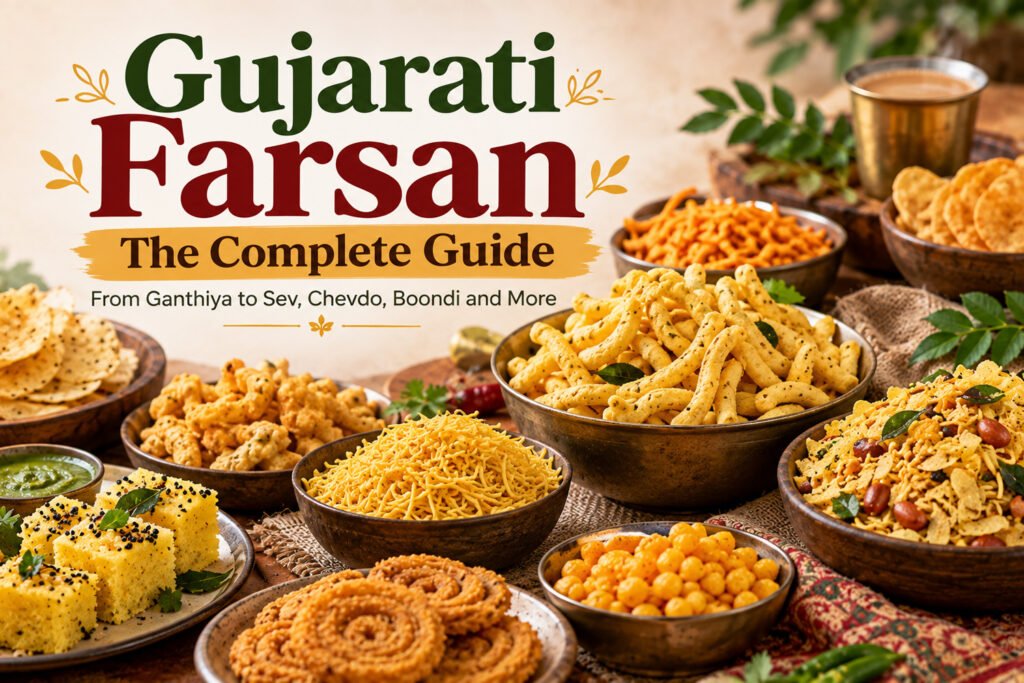
That’s farsan – and it’s one of the most developed savoury snack traditions anywhere in India. This guide covers what farsan actually means, how it differs from namkeen, and a proper tour of the major types, from ganthiya to chevdo to the things that only appear on particular festival mornings.
What is farsan?
Farsan refers to the savoury snacks of Gujarati cuisine. Most are made from gram flour (besan), often with rice flour or semolina, and are either fried, steamed or roasted.
Farsan occupies a specific place in Gujarati eating that doesn’t translate neatly into English. It is:
- Eaten between meals, typically with afternoon tea
- Served as part of a thali, alongside the main meal rather than instead of it
- Central to festivals and hospitality — you put farsan out when people visit
It is not a side dish, not a starter and not quite a snack. It’s its own category.
The distinction most guides get wrong
Farsan includes steamed items, not just fried and dry ones.
Dhokla is farsan. So are khandvi, patra, muthiya and handvo. These are soft, freshly made, usually steamed, and eaten the same day.
What you buy in a packet — ganthiya, sev, chevdo, fulvadi — is dry farsan. It keeps for weeks, travels well, and is what most people mean when they say “farsan” in a shop.
Both are farsan. The difference is shelf life, not category.
Farsan vs namkeen
These overlap, but they’re not the same word.
Namkeen is a pan-Indian term for savoury packaged snacks — it covers Haldiram-style mixtures, bhujia, and salted snacks from anywhere in India.
Farsan is specifically Gujarati, and is a broader cultural category that includes fresh steamed items namkeen never covers.
In practice: all dry Gujarati farsan could be called namkeen. Not all namkeen is farsan.
The major types of farsan
Ganthiya
Thick, soft-crisp strands of fried gram flour — the most distinctively Gujarati farsan there is, and quite different from the thin crisp sev most of India knows.
Good ganthiya has a particular texture: yielding rather than brittle, with a slight bite. Varieties include:
- Bhavnagari ganthiya — from Bhavnagar, thick and soft
- Nylon ganthiya — finer and lighter, despite the unpromising name
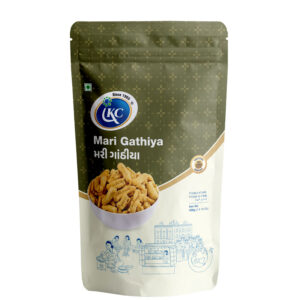
- Mari vanela ganthiya — with crushed black pepper
- Makhaniya ganthiya — softer and richer
- Special methi ganthiya — with fenugreek
Fafda
Flat, wide, slightly chewy strips of gram flour — related to ganthiya but distinct in shape and texture. Fafda has its own cultural moment, covered below.
Sev
Thin crisp strands, finer than ganthiya, used both as a snack and as a topping. Gujarat makes a wider range than most people realise:
- Plain sev — the everyday one, and what goes on chaat
- Nylon sev — extremely fine
- Jadi sev — thicker strands
- Ratlami sev — spiced with cloves and pepper, from Ratlam
- Fudina sev — mint
- Sanchal sev — with black salt
Chevdo and mixtures
Chevdo is the Gujarati word for a mixture — typically flattened rice or cornflakes with nuts, curry leaves, sev and spices. Every family has a preferred style.
- Nylon poha chevdo — light, made with very thin poha
- Green chevdo kothmir — coriander
- Khatta mitha chavana — sweet-and-sour, the most widely liked
- Nadiadi mix — from Nadiad
- Tikha mix — the hot one
- Crispy mix and medium mix
Fried bites
The substantial end of farsan — things with structure, usually eaten a few at a time rather than by the handful.
- Special fulvadi — thick, spiced gram flour sticks
- Mini bhakharwadi — spiral-rolled, sweet-spicy
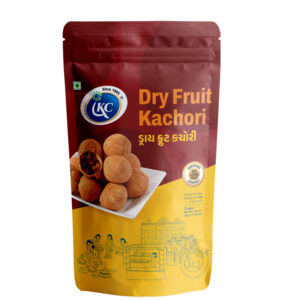
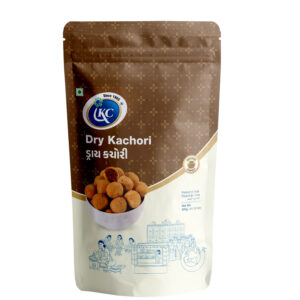
- Dry kachori and dry fruit kachori
- Dry samosa — smaller and crisper than the fresh kind
- Special papdi — flat crisp discs
- Dry patra — the dried form of the steamed colocasia-leaf roll
- Dry bajri vada — pearl millet
Boondi and dal snacks
Small, round, and endlessly snackable.
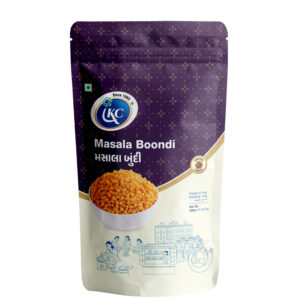
- Plain boondi and masala boondi
- Sev boondi — the two combined
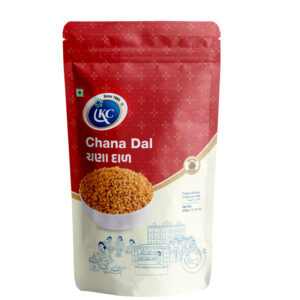
- Moong dal and chana dal — fried split pulses
- Moong jor, spicy and sweet
Roasted snacks
The lighter end — roasted rather than fried, which makes a real difference to the fat content.
Our roasted chana range runs to eight varieties, including masala chana, pudina chana, hing jeera chana and kathiyawadi chana. Alongside those sit the makhana varieties.
Wafers and crisps
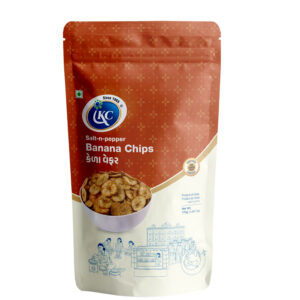
- Banana mari wafer — banana crisps with black pepper, a Gujarati staple
- Banana red wafer — with chilli
- Soya chips and soya sticks
Fafda and jalebi on Dussehra
One tradition worth knowing if you’re not Gujarati.
On Dussehra morning, Gujarat eats fafda and jalebi. Not as a dessert or a snack — as breakfast, in enormous quantities, from queues that form outside farsan shops before dawn.
The pairing is unusual and works better than it sounds: the fafda is salty, chewy and gram-flour plain, the jalebi is hot and syrup-soaked, and eaten together they balance each other. It’s usually served with fried green chillies and a thin papaya chutney.
Why Dussehra specifically has several explanations, none definitive — the most common being that it marks the end of the Navratri fasting period, when a rich fried breakfast feels earned. Whatever the origin, it is now near-universal in Gujarat, and farsan shops plan their entire year around that one morning.
How to eat farsan
With tea, in the afternoon. The default, and what most farsan is made for.
As part of a thali. A small portion of farsan alongside dal, rotli and sabzi is standard in a Gujarati meal.
As a topping. Sev goes on chaat, on bhel, on dahi puri. Instant bhel is the shortcut version.
With khakhra. Farsan and khakhra together make something close to a light meal.
When guests arrive. Putting out farsan is simply what you do. The variety on offer says something about the household.
Storing farsan
Fried farsan goes stale through two routes: moisture, which makes it soft, and oxidation, which makes the oil rancid.
- Airtight containers, always. Decant as soon as you open a packet.
- Cool and dark. Away from the stove, out of sunlight.
- Don’t refrigerate. Same reason as khakhra — condensation. Our khakhra storage guide applies equally to dry farsan.
- Smell before eating anything old. Fried farsan goes rancid before it shows any visible sign. Sharp or stale smell means discard.
- Buy smaller quantities in monsoon. Humidity is harder on fried farsan than on khakhra.








Frequently asked questions
What is farsan?
Farsan refers to the savoury snacks of Gujarati cuisine — typically made from gram flour, and either fried, steamed or roasted. It includes dry packaged snacks such as ganthiya, sev and chevdo, as well as fresh steamed items like dhokla and khandvi.
What is the difference between farsan and namkeen?
Namkeen is a pan-Indian term for savoury packaged snacks. Farsan is specifically Gujarati and is broader, including fresh steamed items that namkeen does not cover. Most dry Gujarati farsan could also be called namkeen, but not all namkeen is farsan.
Is dhokla farsan?
Yes. Dhokla is steamed farsan, along with khandvi, patra and muthiya. The packaged dry snacks sold in shops are only one part of the category.
What is the difference between ganthiya and sev?
Ganthiya is thicker, softer and chewier, with a yielding bite. Sev is much finer and crisper, and is used both as a snack and as a topping for chaat. Both are made from gram flour.
Why do Gujaratis eat fafda and jalebi on Dussehra?
It is a long-standing Gujarati tradition, most commonly explained as marking the end of the Navratri fasting period. The salty, chewy fafda balances the hot syrup-soaked jalebi, and the pair are usually served with fried green chillies and papaya chutney.
How long does farsan last?
Dry fried farsan typically keeps for several weeks in an airtight container. It goes rancid rather than mouldy, so smell is the test rather than appearance.
What is chevdo?
Chevdo is a Gujarati mixture, usually built on flattened rice or cornflakes with nuts, curry leaves, sev and spices. Styles vary considerably by region and family.
